Hi there everyone - and welcome to the CMPB's second official blog post!
While the today's central topic does not necessarily follow our introduction published a few days ago, the war on drugs is one critical reason Jerry and I wanted to start up a blog. So in a sense, discussing what we have seen in our own lives on the issue might breathe some inspiration for dialogue and deliberation into various posts throughout our time here.
By this time, if you haven't heard of the "failure of the war on drugs," I'm going to guess you haven't heard of Miley Cyrus or twerking - but then again, that might actually be a good thing. Journalists (who offer suffer unintended consequences of the war), economists, non-profits, and even social conservatives like John Boehner and Eric Cantor (as described by HuffPo) have been either advocating for outright legalization of marijuana (and/or other illegal drugs), or have at least committed to cutting some of the federal budget allocated to enforcing the war.
Marijuana has a vast independent black market - for people who want to use it medically, recreationally, or just sell a product. As Radley Balko has reported, pot and other drugs create incentives for aggressive police behavior and "zero tolerance policies" in schools or other public institutions. If you get caught smoking marijuana, you can lose your job or your property, but if you harass overweight airplane passengers or steal from civilians in another public-official capacity, chances are you won't even be put on leave.
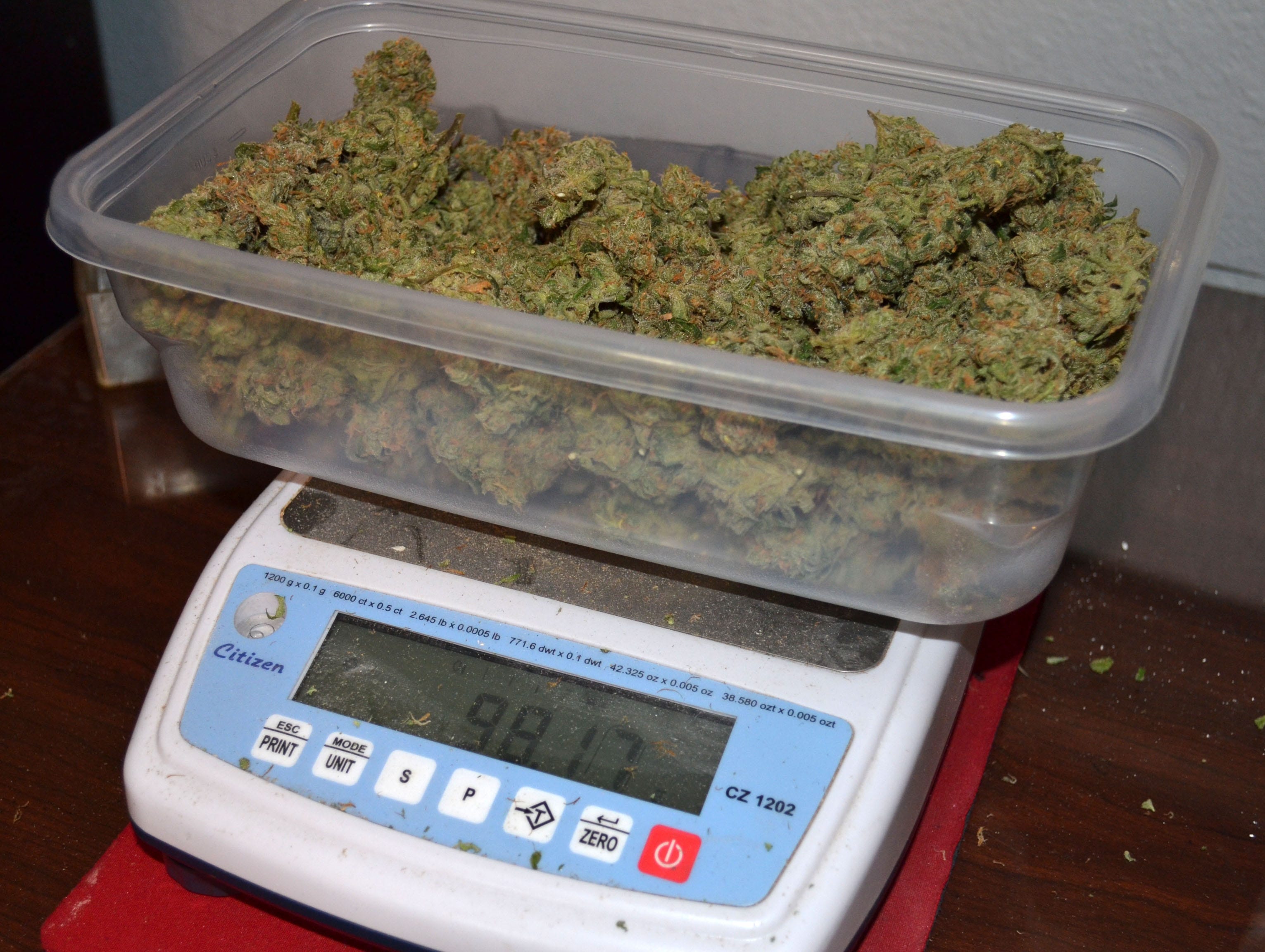
So, how does the drug war influence life at Notre Dame? Take a look at http://norml.org/laws/ - then open a tab for Ohio and Indiana respectively. In Ohio - my home state (and locale of The Ohio State University - Jerry's alma mater) - carrying under 100 grams of simply requires a $150 fine. Since I had no idea what 100g looked like before writing this blog, I came across this photo - assuming it is not photoshopped, you could be walking around with a big tupperware container's worth of marijuana and get off relatively easy in the Buckeye State. Compare that with Indiana - where 30 grams or less could result in a one year incarceration or $5,000 fine.
From Notre Dame's du Lac (student life handbook):
"Students found responsible for possession or use of illegal drugs or
controlled substances, the unauthorized possession or misuse of
prescription drugs, or the possession of drug paraphernalia may face
temporary dismissal from the University. Students found responsible for
distribution of illegal drugs and substances, including the illicit
redistribution of prescription drugs, may face permanent dismissal from
the University."
Smoke alone, get suspended for a semester. Give a joint to a friend, get expelled. Hmm.
I am not sure why ND is so stringy on marijuana but not alcohol, especially considering the stronger negative effects of alcohol on the student body. We receive emails about sexual assaults or students sent to the hospital from stomach poisoning, but when have we heard about a mental or physical assault that involved marijuana? This leads me to believe that Notre Dame simply wants to comply with Indiana's (tough) state laws and is complacent to respect those rules. From an article I wrote last year about ND's marijuana policies:
"This article
is
not written to persuade others to try marijuana or to sanctify THC; it is meant
however to bring Notre Dame’s inconsistent drug policy back to light. Hopefully
the student body and student government will continue to work with the
administration towards making a more just policy towards marijuana – does one
offense really justify a mandatory suspension, if not expulsion?
...As a private institution, Notre Dame has the right to create its own
standards and define violations of its own school policies, and the
school, of course, has to enforce federal and state law. However, with
the rapidly changing climate of marijuana policy, Notre Dame should
reconsider the way its strict rules can turn a 20-year-old’s life upside
down for making a mistake in the eyes of the law and make its policies
more equal across the board."
It pains me to imagine a scenario where one of my friends might end up in one of these situations. I don't know all of their personal habits and certainly wouldn't judge them if I did. However, kicking out students from Our Lady's University because they sat on a couch smoking a plant seems like a ludicrous way to spend resources when there are seemingly thousands of better things the police could be doing with their time. It's comforting to know that times are changing amongst the states and federal government are relaxing their policies against nonviolent drug users. Some politicians such as Rand Paul are seeking to remove mandatory minimum sentences which disproportionately affect minorities and lower income families.
If Notre Dame wants to teach peace and simultaneously become a "top research university for the 21st century," it should definitely seek out policies that will help those who need it with their addictions. However, it need not enforce its harsh penalties for marijuana use and actively seek to vilify those who choose to do so - especially when the legal framework that influenced du Lac is transforming so rapidly. Instead, why not start educating students about the abusive drinking that goes on before Thursday nights at Finny's? Why not enlighten freshman girls who think it's a good idea to take way too many shots of Kamchatka before going to a football game?
There are many great reasons to go to the University of Notre Dame. It is one of the top ranked universities in the country year after year, has the best college cathedral in the states, FOOTBALL, has tons of research opportunities, boasts intramural sports from soccer to battleship (look it up, trust me), and has one of the most renowned alumni networks in the country. This is a truly special university and has so many reasons to be proud of its fabled history; I hope we will be able to look back and see Notre Dame being more positive with its response to marijuana use too.
Have you experienced any of the ancillary consequences of the drug war? How do you see the states changing their laws in response to social pressure in the next 10 years? 20? 50? What's the best way to deal with this issue? Is it even a problem? Should smoking marijuana be stigmatized as it has been? Is there a role for government (or private institution's) paternalism? If so, who decides, and how do we determine if it is a just decision?
There are so many questions to ask and each one must be carefully analyzed individually. It is incredibly hard to quantify how people have suffered from the drug war (and perhaps, how we have collectively benefited) - but from what I've seen firsthand at Notre Dame, I am not at all convinced that the war has brought about positive value equal to what the nation has spent on enforcing it. That number, sadly, is likely not even close at all.

No comments:
Post a Comment